USA
USA  United Kingdom
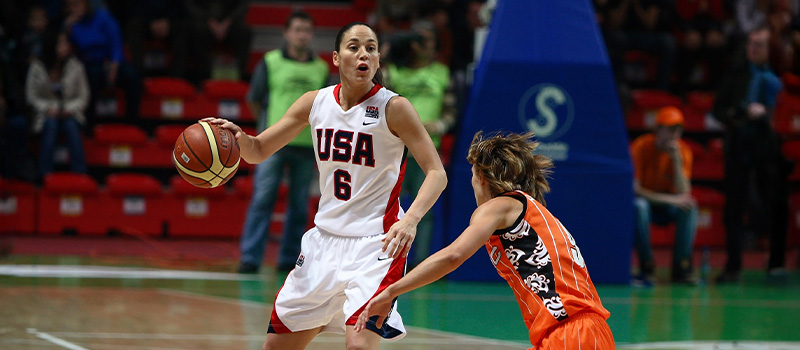
WNBA (Women's National Basketball Association) stars took their battle for pay parity public, donning warmup shirts reading “Pay us what you owe us” before the league’s mid-season all-star showcase.
The protest comes as collective bargaining talks have stalled between players and league officials. The Indiana Fever’s Aliyah Boston warmed up in the shirt before tip-off, while Napheesa Collier delivered a record-setting 36-point performance during the game.
Under the current WNBA Collective Bargaining Agreement, players are entitled to 25% of profits, so long as the league meets its revenue targets each year. One player per team can earn up to $250,000 per year, with rookie contracts starting at $72,000.
But this is in stark contrast to the NBA, where players receive 50% of all revenue generated regardless of targets.
"Rev sharing is truly transformational," Los Angeles Sparks guard Kelsey Plum said.
"We want a piece of the entire pie. Not a piece of part of the pie. We're a resilient group. We know the unity it takes to be able to get the outcome desired."
Complicating the pay row is a disconnect between reported losses and strong growth indicators across the league. NBA commissioner Adam Silver previously said the WNBA had suffered $10m in annual losses in 2018. Reports last fall projected that figure to hit $40m in 2024.
Rising rights deals, revenues, and attendance
Despite those reported losses, the league’s numbers do show upward momentum. Attendance, which had dropped to under 7,000 per game after the pandemic, surged close to 10,000 again in 2024, thanks in part to rookie stars like Caitlin Clark.
Broadcast rights, worth zero in 2002, have climbed to $60m annually, and could reach $200m under the joint NBA-WNBA media deal. Total revenue has also increased from $102m in 2019 to between $180m and $200m in 2023, according to Bloomberg.
Player costs have risen as well, including a new $25m annual commitment to charter flights. The league’s salary cap has grown from $622,000 in 2003 (adjusted to $1.1m) to $1.5m in 2025. But even with one fewer team than in 2003, total player payroll has only gone from a maximum of $15.4m to $19.5m.
Limited roster spots and low salary concerns
Meanwhile, players remain far from equity in revenue sharing. WNBA player compensation accounts for less than 10% of league income, while top executives in other leagues receive far higher shares.
The minimum WNBA rookie salary sits at $66,000, compared with $1.27m in the NBA. WNBA teams also carry smaller rosters, with just 11 or 12 players compared to the NBA’s 15 regular and three two-way contracts.
Some players face job insecurity due to roster cuts. In a recent Golden State-Phoenix matchup, Phoenix had only eight players available.
Team valuations are also on an upward trajectory. The New York Liberty sold for between $10m–$14m in 2019. Just six years later, a stake sale valued the team at $450m.
Despite online backlash and claims of ongoing losses, WNBA players are demanding answers. “Pay Us What You Owe Us” reflects years of frustration over stagnant pay and a belief that the league’s rising tide hasn’t lifted all boats.
The campaign has gleaned support from notables including NBA stars Lebron James, Steph Curry, and former First Lady, Hilary Clinton.