USA
USA  United Kingdom
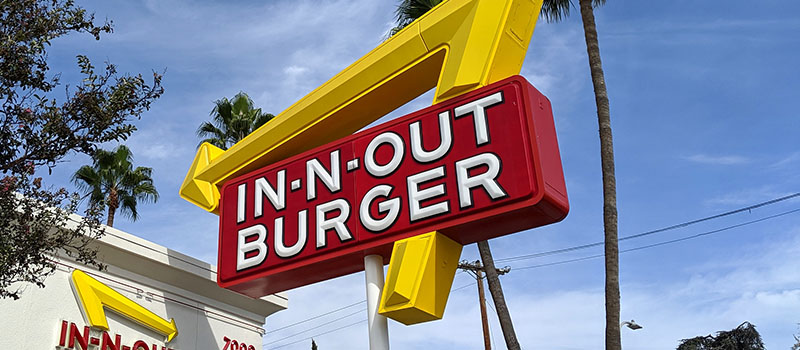
In-N-Out finds itself at the heart of a $3million discrimination lawsuit after an ex-employee claimed he was discriminated against and fired based on his “natural hairstyle.”
The claimant, Elijah Obeng, was employed by the fast-food chain in California from June 2020 until his dismissal in Spring 2024.
According to court documents obtained by Fox Business, the former employee is seeking damages for emotional distress, reputational harm, and loss of employment.
In-N-Out declined a request for comment from Fox Business and other news outlets, stating it does not comment on ongoing litigation.
In-N-Out’s ‘grooming policy’ at the heart of $3m discrimination lawsuit
Obeng, who is African-American, alleged he was discriminated against during a dispute involving his hair.
In the court documents, the former burger chain employee argued that his natural hairstyle and hair texture complied with In-N-Out’s grooming and uniform policy, which requires employees to be clean-shaven and keep their hair under a hat.
After growing his hair longer, management told Obeng to either cut his hair or alter it, the worker claimed.
He subsequently braided his hair but was then ordered to cut his sideburns by restaurant bosses, the suit said.
Why HR still struggles to reach Deskless Employees
Frontline employees often have the greatest need for HR support—but the least access to it. The reason is simple: most HR systems were designed for desk-based employees.
If you're investing in HR digital transformation, it's essential to ensure that every employee—whether office-based, hybrid, or deskless—has equal access to HR services, information, and support.
This guide explores the key considerations for building a consistent, accessible, and connected HR service experience for your entire workforce.
You'll learn how to:
✅ Deliver consistent HR support across every location
✅ Reduce repetitive HR requests
✅ Improve self-service adoption
✅ Connect email, mobile, AI and employee portals
✅ Create a better employee experience for frontline workers
Obeng argued the order was humiliating and discriminatory, and alleged the dispute resulted in management treating him differently from his colleagues, including stricter reprimands for minor infractions and being denied opportunities for promotion and career advancement.
In May 2024, Obeng was sent home by company management and told he could only return once he had shaved his sideburns, court documents said.
Fast food chain accused of violating CROWN Act
Refusing to follow that order, Obeng never returned to his role and was fired shortly after, with In-N-Out reporting the decision was due to previous write-ups.
Obeng disagreed, claiming it was his “ancestry, color and race, including his natural hairstyle and hair texture,” that prompted the firing.
His legal representative argued In-N-Out's alleged mistreatment of Obeng violated the CROWN Act.
The act, an official law in 27 states, including California, protects workers against "discrimination based on race-based hairstyles by extending statutory protection to hair texture and protective styles such as braids, locs, twists, and knots in the workplace.”
Alongside $3million in damages, Obeng is seeking $200,000 in lost earnings.