USA
USA  United Kingdom

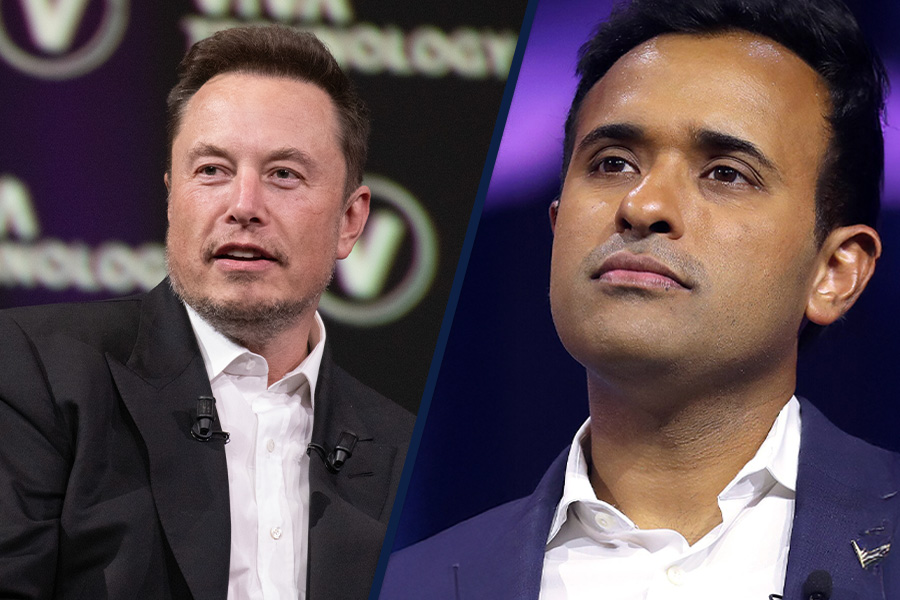
Co-chair of Donald Trump’s Department of Government Efficiency (DOGE), Vivek Ramaswamy has suggested that the proposed large-scale job cuts to Federal departments could be “good” for workers.
DOGE, jointly lead by Tesla and ‘X’ boss Elon Musk, has proposed sweeping cuts to federal staffing and an end to work-from-home policies, and even closing entire departments.
Ramaswamy said recently that reducing the federal headcount is less about cost savings and more about eliminating what he views as unnecessary bureaucratic roles. He contended that transitioning government workers into the private sector would boost the US economy’s productivity.
He said slashing the federal workforce could be "good for many of the individuals who make a transition from government service back to the private sector”.
“The highest and best use of those talented people isn’t in federal service,” he said, promising “generous” support for displaced workers.
Despite this optimistic framing, many federal employees are unlikely to see the planned layoffs as a net positive. In fact, it reinforces the impression that little thought is being given to the impact that swathes of jobs cuts will have on the people involved and will be detrimental to the morale in many government departments. Ramaswamy has previously advocated for reducing the federal workforce by 50%, a goal he acknowledges will face political and logistical hurdles.
DOGE plans complicated
Ramaswamy and Musk’s rhetoric has already created huge uncertainty for workers, their families, and communities reliant on stable public sector employment.
Complicating those plans, however, is a recent agreement between the Social Security Administration (SSA) and the American Federation of Government Employees (AFGE). Signed in the waning days of the Biden administration, the deal preserves hybrid work arrangements for 42,000 SSA employees until 2029. Under the agreement, staff will be able to work remotely between two and five days a week, depending on their roles.
Rich Couture, president of the AFGE chapter representing SSA employees, lauded the deal as a measure that not only secures remote work but also helps prevent high attrition rates. “This ensures the agency can continue serving the public effectively,” Couture stated.
HR Conversational Agent: Do's & Don'ts
HR chatbots are everywhere. But answering “What’s my vacation policy?” is only the beginning.
The real value of conversational AI starts when an HR Agent can understand employee context, access the right HR knowledge, trigger requests and workflows, and connect with the systems already in place.
So how do you tell the difference between an impressive AI demo and a solution employees will actually trust and use?
In HR Conversational AI: 5 Do’s & 5 Don’ts, discover the key principles for building an HR Agent that delivers real value — and the common mistakes that can turn an AI initiative into yet another tool employees ignore.
You’ll learn how to evaluate:
Employee experience: Can employees get relevant, personalized answers?
Action: Can the Agent actually initiate HR requests and processes?
Integration: Does it work with your existing HR ecosystem?
Trust & governance: Is employee data handled securely?
Adoption: Will employees actually want to use it?
Before choosing your next HR AI solution, know what to look for — and what to avoid.
Musk and Ramaswamy have criticized remote work policies as emblematic of inefficiency, arguing that requiring employees to return to the office full-time could trigger voluntary resignations they view as beneficial. It’s an approach risks significant legal, logistical, and reputational challenges for federal HR departments.
Protracted legal disputes
Unionized government employees, including those at the SSA, are protected by collective bargaining agreements that dictate terms of employment. Legal experts suggest that overturning these agreements without union consent could result in protracted legal disputes. One labor law professor, warned, “The US government must honor its agreements.”
For HR leaders, the dual challenges of navigating potential layoffs and hybrid work policy debates underscore the importance of proactive workforce planning. Managing morale, ensuring compliance with labor agreements, and maintaining operational continuity will be critical for both government HR teams and private-sector employers poised to absorb displaced federal employees.
As the DOGE proposals gain traction, HR professionals are bracing for a turbulent transition that could redefine the careers of thousands of federal employees.