USA
USA  United Kingdom
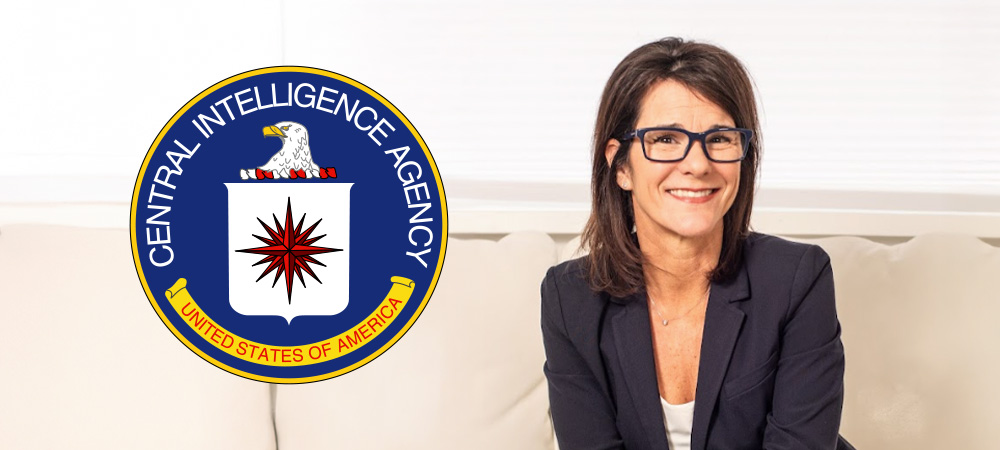
The role of Chief Wellbeing Officer at the CIA did not exist until it did. And when it arrived, it came with Congressional backing and a mandate that went far beyond yoga classes and resilience webinars.
Dr. Jennifer Posa, former Chief Wellbeing Officer at the Central Intelligence Agency, did not set out to join the intelligence community. In fact, she did not even believe it was real when the call came.
“I was six and a half years at Johnson & Johnson, and then in 2022 I received an inquiry from the Agency to see if I would entertain taking on the role of the first Chief Wellbeing Officer for the CIA. It was not something I was looking for. It wasn't anything that I knew even existed.
“I received the phone call and actually didn't think it was real! I thought it was a prank. And then I shared with my children that night at dinner, ‘Guess who called me today?!’ And they're like, ‘What?! The CIA called?’
“When they called back on Monday, I realized it wasn't a joke, and I ended up having conversations with them around the role. It was the first congressionally-mandated position in the US intelligence community where the responsibility was to define and execute a holistic, comprehensive wellbeing strategy including the establishment of the Office of the Chief Wellbeing Officer within the agency.”
I shared with my children that night at dinner, ‘Guess who called me today?!’ And they're like, ‘What?! The CIA called?’
That phrase, “holistic, comprehensive wellbeing strategy,” is doing a lot of heavy lifting. But for Posa, it was the natural extension of a career spent embedding wellbeing into complex organizations.
“I was 17 years at Mayo Clinic, which is an institution and health system that is world-renowned and has some of the greatest experts in the medical field. I was privileged enough to take a lot of their IP and bring it out to organizations to implement evidence-based interventions – or what we call today holistic wellbeing. They have focused on the holistic picture of health and wellbeing for individuals for decades.
“At that point, Johnson and Johnson recruited me to their organization, which was an interesting shift because it was going from a not-for-profit health system to a diversified healthcare company, one of the largest in the world at the time.
“My last role at J&J was pretty exciting because it was really something that I take a lot of pride in, which was defining and executing the mental health and wellbeing strategy for J&J employees around the world - during the COVID pandemic.
“At the time, they had about 140,000 employees in 77 countries. When the pandemic hit, that was quite obviously a disruption for all of us. But being in that role enabled me to experience and really play a critical role with the leadership at J&J and define how we were going to manage that and ensure that we could sustain our performance throughout the pandemic.”
Saying yes to the CIA
Leaving that behind was not straightforward, being well-established in a senior role at Johnson & Johnson.
“There were three reasons I said yes. Because I really did intend to stay with my team at J&J and continue to do amazing things at a wonderful organization.
“First and foremost, it was the opportunity for me to serve my country in a capacity I certainly never imagined. Secondly, I felt as though it would give me the chance to have an even greater impact on the world. Third, it was developing a new, innovative initiative, which is what I most enjoy doing.
“So for me, it was incredibly exciting - an opportunity of a lifetime. To be honest - and as you would expect - I didn't have a lot of information before I went in. I mean, that was the information I received. Your job will be this, and you will come in and do this. And, of course, I asked lots of questions and the answer oftentimes was ‘we can't tell you that’, ‘we can’t share that’. But I think that for every individual who joins the intelligence community, that is the experience, because there is a reason for things not to be openly shared and public knowledge; it's the business of intelligence.
“I was confident in my experience and quite frankly, more excited to bring what I knew would be super impactful for the organization.”
Defining the wellbeing strategy
The first task was straightforward in principle - to find out what needed doing in to improve the agency’s health and wellbeing among its staff.
“The first agenda item was what you would expect from any new leadership position, which is to identify priorities, put an executable strategy together, and execute that strategy. That was no different than the other positions I had been in.”
As a public sector role, however, the difference was Government backing and funding.
“It was the difference of having Congressional support to say, ‘Take this, build and execute that strategy, so that we can go further with our mission as an organization.’”
Health became the factor that determined whether an organization could sustain and perform. Employee health became a strategic priority
Wellbeing is not the first thing that springs to mind when talking about the CIA, it’s usally…. well, other things, and as the first Chief Wellbeing Officer through the door the obvious question to have asked was ‘What changed?’ And ‘Why now?’.
As Posa explains, it was COVID that shifted the needle, as it did on so many workplace-related components.
“Before joining the Agency, when I was at J&J and COVID occurred, health became the factor that determined whether an organization could sustain and perform. Employee health became a strategic priority. Because if people couldn't show up, and the only place they could do their work was in an office, you weren't going to be able to execute your business strategy.
“COVID was very difficult for all of us, but there was a silver lining for individuals like me who spend their days supporting the health and wellbeing of a workforce. Organizations around the world were prioritizing the health and wellbeing of their employees. This was true for the Agency as well.”
So, with that came a sharper focus on mental health which, given the work many people at the Agency do and the pressure they sometimes operate under, was becoming an overlooked priority.
“The other thing COVID did was raise awareness on mental health and mental wellbeing. It was challenging for everyone, whether you had a mental illness or condition - or not. Everyone was struggling emotionally and mentally with the changes that were happening.”

From pain points to performance
The role was diagnostic as much as prescriptive and, while Congressionally mandated and monitored, was very much Posa’s to form and shape.
“The responsibility was to truly understand what is both driving and restricting wellbeing. So, what are the positives and the negatives of your workplace environment? And then how are we accelerating the positives, and mitigating against the negatives?
“The approach that I recommend taking, and certainly one that I've taken many times, has been to identify pain points. You can do this through qualitative research, focus groups, and open dialogue with individuals about what those drivers could be. Then you identify the priorities that a leadership team is willing to invest in and be held accountable for.
“Following these steps, you ensure that you identify goals for the organization and hold yourself accountable to achieve them. When you measure specific goals and are achieving them, again through partnership, most times it's not just a CWO doing this; it's truly a partnership, and then you track whether you've achieved them. Circle back to the organization, meaning the employees and the leaders, and say, ‘This is what we've achieved based on what you've shared with us and these goals.’”
This being the CIA, you’re not about to get any hard data on the mental health of its agents, but the impact, she says, was tangible.
“With the work that we did, we made a significant impact on the culture. For example, if it was trying to understand where to access care and treatment, we made sure that it was easier to find. If it was, ‘How do I have a conversation with my leader because I'm feeling as though my workload is really heavy, or heavier than I have the ability to deliver?’ Or, ‘I think there's a creative way to make sure that we can perform at a higher level to enhance achieving the mission.’ - those conversations were happening.”
Tradecraft, burnout, and human performance
Inside the intelligence community, performance has its own language, and you will find that you have probably heard a surprising amount of it in the many and various spy movies available.
“The word that I learned when I began working in the intelligence community was ‘tradecraft’. When someone is trained up and mastering a skill to do a specific job, it's called tradecraft. So, what's your tradecraft? Where are you training for your tradecraft? To ensure that someone has the right training; to do a very specific job that is in a high-risk environment, you're building their tradecraft. It's very important.
“Oftentimes, I would talk about performance tradecraft, which described the methods and techniques of supporting human performance. Think about when you have a system, or a process that you've built, which obviously has served the agency well for years in terms of their tradecraft training, think about adding human performance training to that system."
What's your tradecraft? Where are you training for your tradecraft? To ensure that someone has the right training; to do a very specific job that is in a high-risk environment, you're building their tradecraft. It's very important
If someone goes into a situation and doesn't recognize the importance of recovery, they will likely burn themselves out. And their performance level and ability to perform their specific tradecraft will continue to decrease over time.
“The role of a CWO focuses on risks as well as opportunities. For example, a risk would be burnout. A function of the CWO is to mitigate the risk of burnout and identify where the organization can reduce the risk through systems, processes, policies, and other cultural elements that may be driving the risk. If we are burned out, we aren’t going to be exceptional at achieving our mission; there is an internal risk that all organizations should be proactively managing. Conversely, a CWO also focuses on what those organizations are doing well and how to enhance those opportunities in order to accelerate their growth, and facilitate a stronger connection with the community you work within.”
Stepping away and looking forward
Perhaps the greatest stress test of the work she had done at the Agency came when she needed to lean on the very structures she had helped create. Even a Chief Wellbeing Officer must practice what she preaches. Especially the CWO, in fact. With an elderly parent needing care, Dr Posa found herself with a work-life balance decision to make.
“Unfortunately, my Mom needed a lot more care. So, I took my own advice as a CWO, which is to recognize when you can't do both the priorities in your personal life and the priorities at work simultaneously. Something has to give, or you’re not going to do well at either. So it was a values-based decision for me."
So, she stepped away from the Agency (although isn’t it obligatory in every spy story to point out that no-one never really leaves?) and now, having set up her own wellbeing consultancy, she advises others.
“I serve as an advisor to organizations and to leaders, and that's my primary function. Some would call it a fractional CWO position where I'm not full-time with one organization but working with many organizations to help them with what we talked about today.
“If you're not ready for a CWO (and there are organizations that aren't to be honest with you), maybe you just want to understand what the pain points are and what the priorities should be. Maybe you want to understand the types of leaders who should be taking this on and held accountable. Maybe you want to look at different performance scorecards for your leaders so that wellbeing is on their scorecard, so they can learn and think about how they use wellbeing to drive business performance, peak performance, and individual performance.”
So, the day to day has changed, the workalike balance has altered, but the core ideas and strategies remain consistent.
“I want to empower leaders to make sure they are influencing what matters most to people and can support their peak performance. What matters most to people comes down to how they define their own overall wellbeing and what drives that wellbeing, which is oftentimes the relationships we have.
“In many senses, this is the science of building the right relationships in the workforce to empower all of us to perform at peak levels and drive whatever mission it is that you're committed to each day.”
You might imagine from streaming too many series or movies that the Agency is full of people living on the edge and not worrying too much about it because... that’s the job. But, in fact, with so much at stake, peak performance - and therefore wellbeing - matters even more.
Wellbeing, in the right hands, is not an add-on to mission success. It is mission-critical.